
We are often familiar with rust forming on metal’s surface. Scientifically, it is known as iron oxide. It forms on a metal surface through a process called corrosion. You need to remove this rust from a metal surface for several reasons. You can do it using various rust-removing methods. Laser rust removal is the most widely used method.
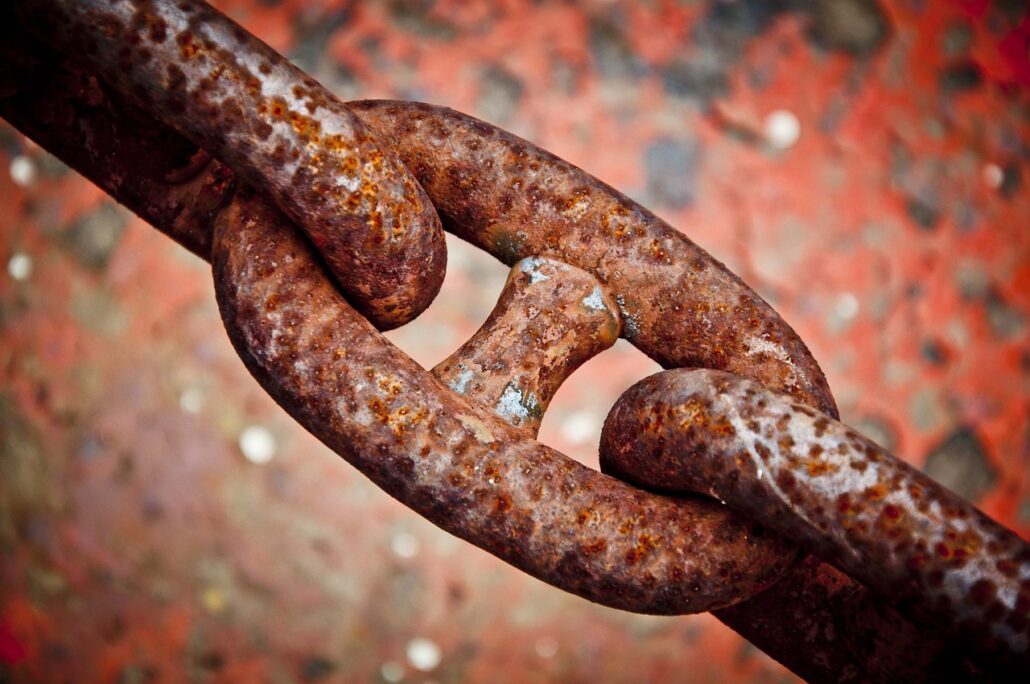
Well, why do you need to remove rust? First, it hampers the metal’s structural integrity.
Second, rust accumulation interferes with the proper functioning of a system. This system may be mechanical or electrical.
Third, rust can diminish the visual appeal of objects, structures, or equipment.
Fourth, rust makes metal components less durable.
Laser rust removal is a cutting-edge technology. It uses high-intensity laser beams to clean rust and contaminants. It doesn’t even damage the underlying material. That’s the beauty of using laser technology.
You may know about other cleaning techniques like sandblasting & chemical cleaning. But these ways aren’t good because they affect the underlying material. On top of that, they are hazardous to the environment. Laser cleaning technology lets you solve that problem.
Today, we will talk about the working principles of the laser cleaning process. We will mainly know how laser rust removal works.
What is Laser Rust Removal?
As the name implies, it is a cleaning method that uses laser technology to remove rust. This cutting-edge technology aims to make the cleaning process quick & easy.
In this method, high-intensity laser beams are pointed at the rusted areas. It turns the rust into vapor and removes it without damaging the underlying substrate. We will briefly discuss how it works later.
Unlike other methods, laser rust removal is accurate and doesn’t require touching the metal. Also, it doesn’t damage the primary material.
In recent years, the laser rust removal market has witnessed significant growth. The increasing demand for advanced surface cleaning solutions typically drives this market. Experts predict the laser rust removal market will reach USD 0.78 billion in 2024. They expect it will rise to USD 1.53 billion by 2029. The CAGR rate is expected to be 14.61%. [Source: Mordor Intelligence]
Laser rust removal is frequently used in many fields. It’s primarily used in the shipbuilding and auto businesses because it has many benefits. Laser rust stripper is used in the car industry to clean engine parts, chassis, and body panels. In the same way, laser rust removal tools are common in other fields.
How Does Laser Rust Removal Work?
Laser rust removal is a handy method. Many use this method to remove rust, oxide, dirt, paints, and coats on different surfaces. This method is better than standard ones in several ways. Understanding the specific steps shows how well and precisely this technology works.
There are safety steps you must take before you begin the process. First, make sure you have the right eye protection. Second, you must set safety rules to prevent people from accidentally touching the laser beam. Third, make sure there is enough airflow to get rid of any fumes or waste.
Step #1 Laser Emission
A laser beam typically comes from a laser source. It can be of various types. In the modern world, CO2, fiber, MOFA and YAG lasers are noteworthy. Mostly, laser rust removal uses fiber lasers.
In a pulse or continuous laser rust cleaner, fiber optic cable acts as the laser medium. Initially, a high-power pump laser excites rare-earth elements. It is typically ytterbium or erbium, doped into the fiber core. This excitation usually creates the emission of photons within the fiber. The photons are then further amplified until they exist as a coherent and intense laser beam.
Step #2 Beam Irradiation
Once the laser beam is emitted, it moves in a careful direction toward the targeted surface. This precise aim is essential. You know, it ensures that the beam’s energy is concentrated on the specific area that needs treatment.
A high-quality laser rust removal gun usually does this. To make it easier to use, it’s small and well-designed. It incorporates high-powered lasers with precise beam control capabilities. Usually, its main job is to focus the laser energy onto the target place accurately and efficiently.
Step #3 Energy Absorption
When the concentrated laser beam hits the target area, it leads to the rapid absorption of energy by the material. It creates localized heating.
This localized heating induces various physical and chemical transformations within the rust layer. It actually facilitates its removal.
Step #4 Plasma Formation
The temperature of the rust layer goes up a lot as the amount of energy consumed goes up. When the temperature is high enough, the material breaks down thermally. At this point, plasma is formed.
Plasma is a state of mass with a lot of energy. It is made up of charged particles. Plasma production is a key part of breaking down the chemical bonds in the rust layer.
Step #5 Shock Wave Generation
When plasma expands very quickly, it makes very strong shock waves. It spreads through the layer of rust and the stuff around it. These waves show that mechanical forces are at work. In turn, this breaks up the rust bits into smaller pieces.
The shock waves also help to separate the rust from the base. In the end, it makes it easier to clean the surface.
Step #6 Debris Removal
Following the generation of shock waves, the fragmented rust particles and debris are expelled from the surface.
You can employ various mechanical mechanisms to remove the dislodged material effectively. In this case, you can use vacuum systems or air jets. Removing debris ensures that the treated surface remains clean & free from debris.
Step #7 Short Pulse Duration
Laser rust removal techniques often use short pulse durations. You know, it helps optimize the process’s efficiency and precision.
A short pulse minimizes the heat-affected zone and reduces the substrate’s thermal damage risk.
Moreover, the precise control of pulse duration allows for different treatment parameters. It makes the process versatile.
Pulsed vs Continuous Laser: Which is the best for laser cleaning?
When it comes to laser rust removal, you may find two popular types: pulsed and continuous. Choosing between these two types depends on various aspects. Note that each factor impacts the cleaning method. They decide how well and quickly the process works.
Laser Source
The main difference between pulse and continuous laser rust strippers is their laser types. As the name implies, one uses a pulsed laser while another uses a continuous one. Each type of laser cleaning machine serves unique purposes.
These main differences show how they clean, how well they work, and how well they can be used for different tasks.
Cleaning Principle
Because their laser sources are different, the way they remove dirt is also different. The continuous laser cleaning machine uses very high temperatures to remove the dirt. On the other hand, pulse laser cleaning machines utilize oscillation to clean dirt particles. This means the pulse laser cleaner does less damage to the material underneath.
Price
The prices for buying and using pulsed and continuous lasers are very different. Because they have a complicated design and can produce much power simultaneously, pulsed lasers tend to cost more upfront. Continuous laser, on the other hand, is less expensive.
For example, the prices of HantenCNC laser rust removal machines range from $6400 to $12,050 for continuous lasers. On the other hand, pulse laser rust cleaning machines‘ prices range from $9200 to $48,000.
Cleaning result
The choice between pulsed and continuous lasers depends on the desired cleaning results. Pulsed lasers are highly effective at removing rust & debris from various surfaces. You can work on metals, ceramics, and composites with minimal substrate damage. They can also achieve precise cleaning results even on complex geometries. But the cleaning speed of the pulse laser is slow. Therefore, they are ideal for cleaning small metal parts.
Continuous lasers produce extreme heat to clean the surface. They are relatively faster than pulse laser cleaning. Therefore, continuous lasers are suitable for larger areas.
Why Use Laser Rust Removal Technology?
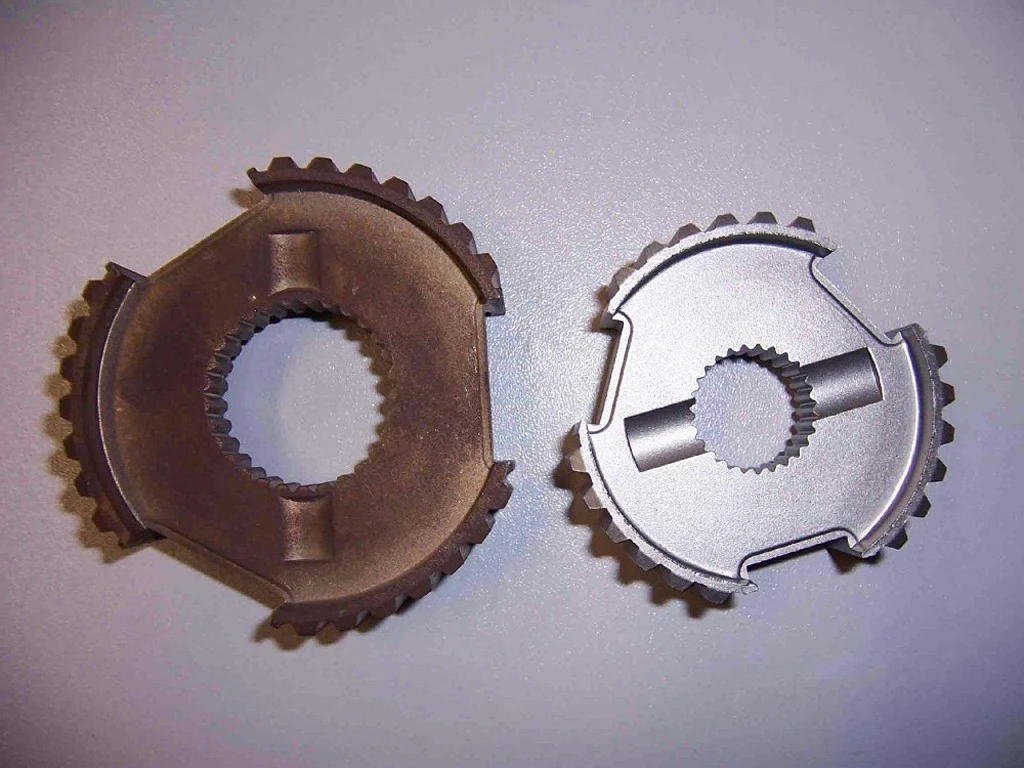
Fast & Efficient
Laser cleaning technology is fast & efficient. You can quickly clean up large areas with fine control and strong laser beams. This means that it reduces the downtime in industry processes.
Versatility
Laser rust removal systems are highly versatile. It works on more than just rust. It also works on dirt, dust, and paints. Because they are flexible, they can be used in many businesses.
Environmentally Friendly
Chemical reactions and sandblasting are harmful to the environment. Laser rust removal, on the other hand, is a completely safe and eco-friendly method.
No Damage to the Underlying Substrate
One of the key advantages of laser rust removal is its precision. The process tackles only the rust and doesn’t hurt the material underneath.
Cost Effective
Laser rust removal technology might cost more to buy at first. When used for a long time, though, it’s the most cost-effective.
Laser cleaning systems save money on labor costs because they are fast, effective, and flexible. In addition, it doesn’t need much upkeep over time.
Also, dangerous chemicals and rough materials are not needed for laser cleaning. Therefore, it lowers the cost of removal.
Extensive Applications of Laser Rust Removal
Laser rust removal technology is prevalent in industries. The abovementioned benefits typically make them useful in those industries.
This technology is famous for pre & post-welding treatments, oxide removal and cleaning. You may often find it in the automotive, construction, shipbuilding, and marine industries.
HantenCNC is a leading manufacturer of laser rust removal machines. We offer a great collection of different models of laser cleaning machines. Contact us for more information.