
A flange joint is an essential part of many types of pipe systems. Usually, it connects and disconnects two or more pipes. It is a crucial part of how well the connection works. Because of this, we can’t ignore how vital flange joints are. They allow pipe parts to be easily put together and taken apart.
So, it is essential to know the fundamentals of flange joints. It assists you in selecting the correct type of flange, seal, and bolting material. In this article, determine what to think about when picking the right flange joint.
In the following few sections, we will briefly discuss these critical topics. Therefore, hold on tight, and let’s begin.
What is a Flange Joint?
A flange joint connects double pipes, valves, fittings, or other components in a piping system. It mainly consists of two flanges. Most of the time, they are round. These plates are joined with bolts, and gaskets are put between them to make a tight seal.
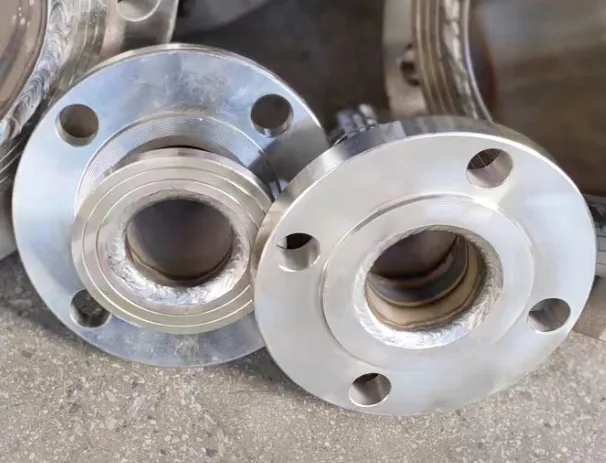
Oil & gas, chemical, water treatment, and heat exchanging systems often use flange joints. They mostly use them to connect parts of a pipe system.
Flange joints ensure the system works safely, without leaks, and efficiently. We can see that the flange joint serves different jobs in a hydraulic or pneumatic system. Let’s check them out in brief.
- Flange joints provide a robust and secure connection between pipes, valves, and other components.
- It facilitates easy assembly and disassembly. As a result, it makes maintenance, repair, and modifications easier.
- A flexible joint flange provides leak-free sealing. It uses gaskets placed between flange faces. As a result, it makes a tight seal.
- It absorbs vibrations and shock generated within the piping system. As a result, it eliminates the certainty of damage to components. Overall, it ensures smooth operation.
- A flange joint can fix minor alignment problems or changes in how pipes are lined up. As a result, it allows for flexibility and tolerance in the installation process.
- Flange mechanical joints are typically designed for extreme pressure & temperature uses.
- Mechanical joint flange allows connecting pipes and equipment of different materials and sizes.
- It makes it easy to check, test, and monitor.
Types of the Flange Joint: Popular Applications
There are many types of flange joints because they are prevalent for various jobs. Pressure, temperature, and connection ways are a few examples that stand out.
Each kind has its unique perks and features. Also, producers make different kinds to meet the requirements of various industries. The goal is to get the best performance and safety in various situations.
Type #1 Weld Neck Flange
A weld neck flange is developed to be welded to the pipe’s end. It has a long weld neck. You can weld it to the pipe.
The Weld neck flange also has a hub at the base. It provides reinforcement and support for the flange.
The welding flange structure also has a flange face and bolt holes. The Flange face is the flange surface that meets the mating flange or gasket. Bolt holes are provided around the perimeter of the flange to accommodate bolts.
The weld neck design typically provides high strength and reliability. It is mainly suitable for extreme pressure & temperature uses.
Weld neck flange welding is common in the oil & gas, chemical, and power industries. Pipelines, heat exchangers, boilers, pressure vessels and process piping systems are commonly used.
Type #2 Slip-on Flange
The slip-on flange slides over a pipe’s end. Its inside diameter is a little bigger than its outside one. It is then welded in place to provide a robust and leak-free joint.
The structure of a slip-in flange typically consists of two main parts. One is the circular disc-like flange, and the other is a short & pipe section.
The flange has a high face and bolt holes all around it. It makes the process easy to connect to other flanges.
The flange’s inside diameter fits the pipe’s outside diameter to which it is connected. It allows it to slide over the pipe easily.
The flange’s outer diameter is slightly larger than the pipe’s outer diameter. It provides space for welding.
Type #3 Socket Weld Flange
The socket weld flange is almost like the slip-on flange. You might not be able to tell these two plates apart at first glance.
The socket in the weld flange is the only thing that makes them different. So, the definition says that a socket weld flange has a socket machined onto the flange’s inner bore. It accepts the pipe end. It is then fillet welded from the outside to provide strength and prevent leakage.
The structure of socket flange welding also has two main parts. Unlike slip-on flange, it has a welded socket inside the short & pipe section. The socket depth typically matches the pipe wall thickness for proper fit and welding.
Socket flanges are often used when high temperatures and pressures are needed.
Type #4 Threaded Flange
As the name implies, these flanges come with interior threads. It usually makes it easier to join pipes or fittings. In fact, the pipes or fittings must have external threads that match.
Most of the time, threaded pipe flange doesn’t need to be welded. Because of this, they can be used in situations where easy setup and disassembly are needed. By threading onto the pipe or fitting, they make a strong lock.
A threaded flange comprises a high face and threads inside it. It needs to match the threads outside the pipe or fittings. When the flange is put onto the pipe or fitting, this raised face helps make a tight seal.
Type #5 Blind Flange
A blind flange is a solid disk. You can utilize it to stop a pipeline or create a dead end. It fits between two flanges but does not have a center bore. Therefore, it is called “blind”.
The structure of a blind flange typically has a solid circular plate with bolt holes around the perimeter. These holes help in connecting the adjacent flanges. The thickness of the plate may vary based on the system’s pressure and temperature requirements.
Blind flanges are often utilized to close off an area temporarily or entirely. In addition, they are used to make inspections, cleaning, and upkeep easier. Furthermore, blind flanges are used to close off pressure vessels and make tank lids.
Material Used in Flange Joint Manufacturing
You already know that the flange joint is a crucial part. It is utilized in different industrial settings. So you can see that their building materials are becoming an issue.
Steel is a popular ingredient utilized to manufacture flange joints. Steel is, in fact, a strong and long-lasting element. Well, stainless steel, carbon steel, and alloy steel are all well-known types of steel. Some applications may use cast irons.
The most common material used to make flange joints is stainless steel. It offers excellent corrosion resistance and high strength. Even so, carbon steel is a cheaper option.
How Flanges Are Made?
Flanges usually have a round shape. They have many holes all around the perimeter. There are different ways to make flanges. Each way is suitable for a specific purpose, works with a particular material, and is cost-effective. CNC milling, casting, and forging are three common ways to make them.
CNC machining
You can make flanges using two CNC methods: CNC turning and milling. CNC machining is an automated process run by CNC codes. You can make the cylindrical shape using the turning method and the holes by milling method. CNC machining is prevalent for its high precision. Of course, it is possible to get as close as 0.01mm.
Casting
Casting is also one of the most popular techniques for making metal parts. The process usually involves putting molten metal into a mold and letting it harden. Various casting methods are used in flange manufacturing. Among those, investment casting and die casting are noteworthy. Casting methods may require additional finishing processes to achieve the tolerances.
Forging
The forging method involves shaping metal by applying compressive forces. It typically uses a hammer or die. Forged flanges are famous for their superior strength and durability. However, this method may be time-consuming. Most importantly, it may not be suitable for batch production.
Selecting the correct manufacturing method is necessary to ensure the desired quality. Material properties, flange specifications, production volume and budget considerably determine suitability.
Returning Questions
What is the purpose of a flange?
The primary job of a flange joint is to assemble or disconnect hydraulic systems. This may include pipes, valves, or other components. Another job of a flange joint is to provide a secure & leak-free joint. It helps with easy disassembly and maintenance.
What is the difference between a welded joint and a flanged joint?
A welded joint connects two pipes permanently. A flanged joint, on the other hand, uses nuts and flanges to connect them. The flange joint is better because it enables simpler repair and disassembly.
What are the reasons for the failure of flanged joints?
There may be numerous reasons why a flanged joint could fail. Improper installation, inadequate tightening of blots, material degradation, corrosion and misalignments are noteworthy. Inadequate sealing can also lead to failure and leaks.